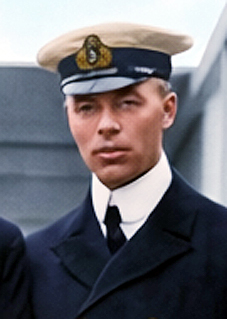
Date of birth: 11th September 1876 Place of birth: Gosport, Hampshire Marital status: Married Age: 35 (in 1912) Spouse: Eliza Jean Glendenning Steele Children: Herbert John Dean(1908–1973), Elizabeth P Dean (1921–1983) Date of death: 6th February 1943 (age 66)
In 1839, Samuel Cunard was awarded the first British transatlantic steamship mail contract, and the next year formed the British and North American Royal Mail Steam-Packet Company in Glasgow with shipowner Sir George Burns together with Robert Napier, the famous Scottish steamship engine designer and builder, to operate the line's four pioneer paddle steamers on the Liverpool–Halifax–Boston route. For most of the next 30 years, Cunard held the Blue Riband for the fastest Atlantic voyage. However, in the 1870s Cunard fell behind its rivals, the White Star Line and the Inman Line. To meet this competition, in 1879 the firm was reorganised as the Cunard Steamship Company Ltd, to raise capital. In 1919, Cunard relocated its British homeport from Liverpool to Southampton, to better cater for travellers from London.
(Source: Wikipedia)
First Officer Horace Dean - Cunard Ships
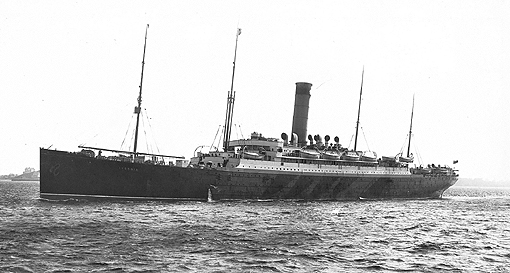
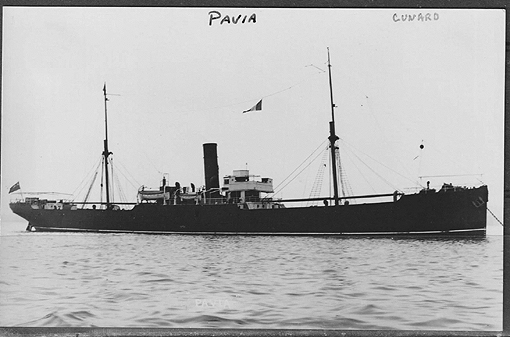
After Dean joined Cunard, his first ship was the Pavia ((1897-1928) a single funnel 2,945 ton cargo vessel. This was certainly different from the White Star's Oceanic - but aboard the Pavia he was now Third Officer. This was followed shortly thereafter in August 1905 by the Ivernia (1900-1917), also as Third Officer, on the Boston service (31.8.05 ,5.10.05, 2.11.05, 1.12.05). He was now back on an ocean liner - 600ft long and with capacity for 1,964 passengers. Over the years it entered service the Ivernia earned a reputation for reliability and steadiness at sea. In fact, the Ivernia (and its sistership the Saxonia) would later provide a footprint for the design of the Carpathia.[1.]
Cunard Liner RMS Ivernia departing Boston harbour in 1902, passing Point Allerton eastbound, circa 1900 (Source:Historic New England, Stebbins negative 13277)
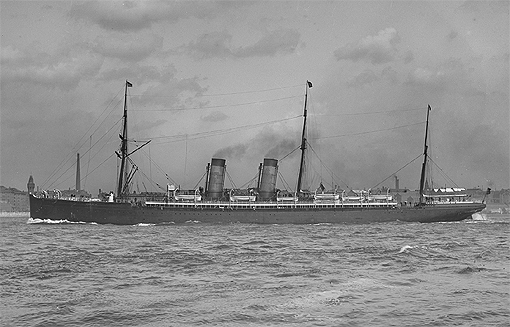
The following year Dean joined the much smaller and older twin funneled Umbria (1884-1910) on the New York service as its Second Officer. In its hayday the Umbria was a holder of the Blue Riband, but by the time Dean joined it was coming to the end of its career. In May Dean briefly returned to working aboard the Pavia as second mate (25.5.06) before continuing aboard the Umbria as its Second officer (10.1.06, 6.2.06, 6.3.06 3rd mate, 3.4.06, 1.5.06, 29.5.06 as 3m, 26.6.06, 24.7.06, 21.8.06).[2.]
A portside view of the Umbria heading out of River Mersey. (Source: Royal Museums Greenwich: identifier 1002242 (G2526 — National Maritime Museum)
But 1906 would be a year not just of promotion - but also marriage. On the 23rd of July 1906 the 29 year old married 26 year old Eliza Jean Glendenning Steele (1880 - 1940) in Christ Church, Claughton Cum Grange, Cheshire, England. She was known as Jean, a native of Cumberland.[3.]
Cunard's Pavia.
Later in 1906 and through 1907 he was moved to the Pavia as Second Officer on voyages to Genoa (16.11.06 - 2M 8.5.07 - 2M - 22.7.07). He briefly stepped back into the shoes of the third mate for his tenure aboard the Campania on the New York service (5.10.07 - 9.11.07). The Carpathia's chief officer Thomas Hankinson had worked his way up through the ranks aboard this ship (between 1898 - 1903) and later, when the ship was converted into the HMS Campania during the First World War Charles Lightoller served aboard her as the First Officer.
In 1908 he was officially listed as having a RNR full rank on the 3rd of January 1908, which was followed by torpedo training on HMS Defiance (1.2.08 - 27.3.08), gunnery training HMS Vivid (28.3.08 - 28.5.08) and general training aboard HMS Cornwallis ( 17.6.08 - 4.6.09).[4.]
Later on 15th of September 1908 Horace and Jean welcomed the birth of their first child - Herbert John Dean (1908–1973), with their address listed as 12 Marlborough Grove, Birkenhead, Cheshire, England.[5.]
In 1909 he returned to the merchant service aboard the two funneled Carmania (1905-1932) bound for New York from Liverpool in the capacity of Third Officer (22.5.09 17.9.09, 15.10.09 - 9.11.09). The Carmania (and its sister the Lucania) had set transatlantic records having been the largest and fastest passenger liner afloat when she entered service in 1893. [6.]
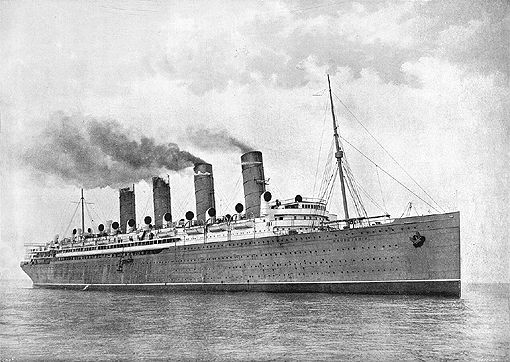
Later in 1909 Dean took a step back into the shoes of Fourth Officer but for good reason: he joined the new and far superior -famed for its speed and luxury - the RMS Mauretania (1907-1935). Dean worked between August and October on a quadruple screw ship that would hold the Blue Riband for fastest transatlantic crossing for 20 years - from 1909 to 1929. As Fourth Officer Dean (12.8.09 - 1.9.09, 1.9.09 - 22.9.09, 22.9.09 - 12.10.09 19.10.09) he would have served under the command of the ships first captain, John T. Pritchard.[7.]
Cunard's RMS Mauretainia in 1907. (Credit: Reprinted from 'Engineering', Illustrated Weekly Journal, Volume 84, July-December 1907, 8 November 1907)
A Supernumerary Officer
According to "The Lachlan & Elizabeth Macquarie Archive." a "Supernumerary:" officer, also referred to as an "Extra officer" is a "member of a ship's crew additional to her established complement."[8.] Indeed on ever increasingly larger ships operating in the early 1900s there was a need for more officers to fulfill the extra operational demands of a larger, faster and more luxurious ship.
For Horace Dean that meant in his next assignment he was an "Ex.3M" (according to this RNR records) or an Extra Third Officer for Cunard's Lusitania (1907-1915) on her New York service, a role he stayed in from October 1909 until January 1910 ( 24.10.09 - 16.12.09, 15.12.09 - 3.1.10, 5.1.10 - 25.1.10). The Lusitania, as a sister to Mauretania, requires little introduction. As with her sister the 31,550 ton 4 funneled ship was launched as the largest and fastest ship of her time, but her sinking from a torpedo strike on the 7th of May 1915 became one of the First World Wars single largest tragedies.
By the end of January 1910 however Dean was moved back to the Mauretania maintaining his role as an Extra Third Officer until May of that year (26.1.10 - 15.2.10, 16.2.10 - 8.3.10, 9.3.10 - 30.3.10, 30.3.10 - 29.4.10, 18.5.10)[9.]
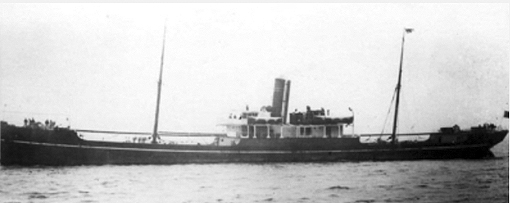
Cunard's Thracia in 1902, when it was known as the Orono. (Shipwrecks of the Cunard Line: https://www.cunardshipwrecks.com/wrecks/thracia.html)
From a 30,000 ton ship to a 3000 ton ship must have been quite the change for Dean, but in May 1910 he was transferred as Second Officer to the Thracia (1895-1917), a single funneled ship capable of no more than 10 knots, with no passenger accommodation at all. However it now meant that Dean was a senior officer. The Thracia, and its sister ship the Lycia, had been both purchased and renamed by Cunard to serve on Mediterranean cargo routes. For Second Officer Dean this meant he travelled to Genoa between May and August 1910 (21.5.10 - 29.8.10).[10.]
Dean remained as Second Officer for is next appointment - to the new Franconia ((1911-1916)) a two funneled ship of 18,000 tons. Dean was present for the maiden voyage that departed on 25 February 1911 from Liverpool to New York City under the command of Charles Appleton Smith.[11.] The Franconia and its sister-ship the Laconia were built to replace the Ivernia and Saxonia on the Liverpool to Boston service, as well as enable winter cruises in the Mediterranean.[12.]
Dean worked as the Second Officer from February to April 1911 (20.2.11 - 11.4.11). In May he was promoted to First Officer, a role he would retain until September 1911, as also confirmed in his discharge book. (11.5.11, 8.6.11, 6.7.11, 3.8.11, 31.8.11, 28.9.11)[13.]
Dean next joined the Carmania (1905-1932) on the New York service. The two funnelled Carmania and her sister, the Caronia were the largest ships in the Cunard fleet when they entered service, but for Dean although this was a step down compared to the mighty Mauretania and Lusitania - this was at least a transatlantic passenger ship and he was the First Officer. His RNR records have him aboard for the months of November and December 1911 (9.11.11 - 22.12.11) but his discharge book also lists January 1912.[14.]
But he was to join a ship in 1912 that would change his life.
Footnotes:
1. "Cunard Liners" Martin's Marine Engineering Page ↩ 2. Dean's RNR records, ADM-340-39-36 ↩ 3. Ancestry.com, findmypast.co.uk, Encyclopedia Titanica (2021) Horace John Dean (ref: #2678) ↩ 4. RNR records, ADM-340-39-36 ↩ 5. Ancestry.com ↩ 6. RNR records, ADM-340-39-36 ↩ 7. "Cunard Liners" Martin's Marine Engineering Page, RNR records, ADM-340-39-36 ↩ 8. https://www.mq.edu.au/macquarie-archive/lema/maritime/officers-and-crew.html↩ 9. RNR records, ADM-340-39-36 ↩ 10. RNR records, ADM-340-39-36, "Cunard Liners" Martin's Marine Engineering Page↩ 11. "BT27/700/3/35/1 - Franconia, Liverpool to New York", UK and Ireland, Outward Passenger Lists, The National Archives, Kew, 25 February 1911↩ 12. "Cunard Liners" Martin's Marine Engineering Page ↩ 13. RNR records, ADM-340-39-36, Franconia 5 September 1911 First Officer (discharge book)
↩ 14. RNR records, ADM-340-39-36, Carmania December 1911 First Officer (discharge book), Carmania, January 1912 First Officer (discharge book) ↩