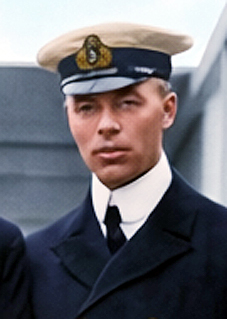
Date of birth: 11th September 1876 Place of birth: Gosport, Hampshire Marital status: Married Age: 35 (in 1912) Spouse: Eliza Jean Glendenning Steele Children: Herbert John Dean(1908–1973), Elizabeth P Dean (1921–1983) Date of death: 6th February 1943 (age 66)
In 1839, Samuel Cunard was awarded the first British transatlantic steamship mail contract, and the next year formed the British and North American Royal Mail Steam-Packet Company in Glasgow with shipowner Sir George Burns together with Robert Napier, the famous Scottish steamship engine designer and builder, to operate the line's four pioneer paddle steamers on the Liverpool–Halifax–Boston route. For most of the next 30 years, Cunard held the Blue Riband for the fastest Atlantic voyage. However, in the 1870s Cunard fell behind its rivals, the White Star Line and the Inman Line. To meet this competition, in 1879 the firm was reorganised as the Cunard Steamship Company Ltd, to raise capital. In 1919, Cunard relocated its British homeport from Liverpool to Southampton, to better cater for travellers from London.
(Source: Wikipedia)
First Officer Horace Dean - Titanic Disaster
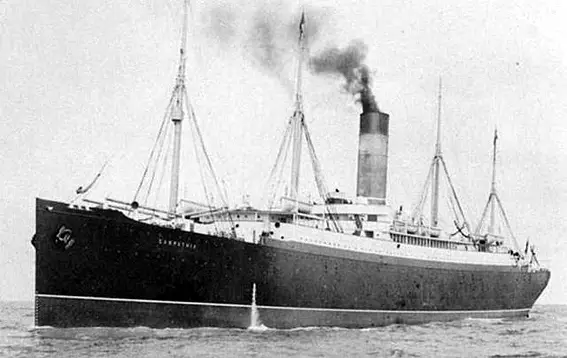
The Cunard liner RMS Carpathia at sea.
In February 1912 Horace Dean joined as First Officer of the Carpathia ((1903-1918)) which as a single funneled ship of 13,555 tons, and a vessel that was part of the Mediterranean service, may have seemed a step further down in size and scope. His RNR records confirm that he worked aboard her from February until January of the following year (7.2.12 - 1.1.13). But it was an event in April 1912 that would have the greatest impact on his seafaring career.[1.]
On the 11th of April 1912 the Carpathia departed New York city at noon bound for Fiume, Austria-Hungary (now Rijeka, Croatia). Indeed the Carpathia was originally designed for the Hungarian emigrant service between Fiume and New York. Along with First Officer Dean there were 240 crew members, 128 passengers in first class, 50 in second class and 565 in third class.
Although the Carpathia's wireless officer was off duty, just after midnight on Monday the 15th of April Harold Cottam continued to work, sending a message to the Titanic that there were private messages waiting for them from Cape Cod. He received a shocking reply: ""Come at once; we have struck a berg," and sent his position, and then he sent C.Q.D."[2.]
First Officer Dean was on duty during the 10pm - 2am senior officer shift. Cottam first of all confirmed the information he had received before reporting it to the bridge - to First Officer Dean. At the British Inquiry he said he reported it "to the officer on watch first, and, from him, to the Captain."[3.]
But Cottam missed out an important detail he only revealed 30 years later during a 1956 BBC interview:
Harold Cottam.
So I took the position on a scrap of paper and rushed up to the bridge with it. When I got on the bridge I contacted the officer of the watch and the information didn't seem as though it had sunk as fast as I thought it ought to, so I rushed down the ladder and knocked on the captain's cabin and as I saw a light I rushed in. And he said "Who the hell....?" or words to that effect so I said well, the Titanic's struck ice, sir and she's in distress. I've got the position here so he said well, give it to me and he put a dressing gown on and went.[4.]
The officer of the watch was of course First Officer Horace Dean and when he reported the news the Titanic was sinking "the information didn't seem as though it had sunk as fast as I thought it ought to." This is perhaps not surprising as Cottam himself had double checked the news with the Titanic.
Cottam then broke protocol by running to Captain Rostron's cabin and rushing in without knocking - spurred on by the fact there was a light on. Dean was likely hot on his heels as indicated by Rostron's version of what happened. At the 1912 Senate hearing Rostron said he was informed by "our wireless operator, and also by the first officer. The wireless operator had taken the message and run with it up to the bridge, and gave it to the first officer who was in charge, with a junior officer with him, and both ran down the ladder to my door and called me. I had only just turned in."[5.]
First Officer Horace Dean photographed in 1912, alongside Chief Officer Hankinson (right).
That the information also came from First Officer Dean was first mentioned by Rostron in a magazine article in 1913:
I turned in about midnight on Sunday, and was just dropping off to sleep when I heard the chart-room door open (this door leads directly into my cabin, near the head of my bunk) and I thought to myself:
"Who the dickens is this cheeky beggar coming into my cabin without knocking?" However, I very soon knew the reason. I looked up and saw the first officer and the Marconi operator; the first officer at once informed me "we have just received an urgent distress message from the Titanic that she had struck ice and required immediate assistance."[6.]
In Rostron's 1931 autobiography "Home from the Sea" he also added that First Officer Dean confirmed the details:
"The news was at once brought to me. Curious how trivial things stamp themselves on the mind in moments of crisis. I can remember my door opening — the door near the head of my bunk which communicated with the chart-room. I had but recently turned in and was not asleep, and drowsily I said to myself; “Who the dickens is this cheeky beggar coming into my cabin without knocking ? ” Then the first officer was blurting out the facts and you may be sure I was very soon wide awake, with thoughts for nothing but doing all that was in the ship’s power to render the aid called for."[7.]
Dean "laughed"
Some resources have described Dean's reaction in a negative light. For example the "Titanic Wiki" website states that "Dean and the officers just laughed at him and said that Cottam was a victim of a joke and that the Titanic wasn’t sinking. Agitated, but taking no time to argue, Cottam hurried off for the captain’s cabin. Dean and Bisset chased after him, but were unable to stop him and Cottam had burst into the captain’s cabin and roused him from his sleep."[8.]
However there is nothing in the original testimony that indicates this - other than the fact Cottam went first into Rostron's cabin, him later recalling because it had not 'sunk in' when he told Dean. However it has been suggested by Titanic researcher and author Sam Halpern that First Officer Dean - as Officer of the Watch - could not just instantly abandon the bridge upon Cottam's report, and may well have been in the process of handing over the watch to a junior officer, when Cottam rushed ahead of him impatiently. What Cottam seemed was "not sinking in" could well have been simply bridge protocol. In fact in his Senate testimony Rostron mentions the moment the message was given to the bridge "the first officer who was in charge, with a junior officer with him".[9.]
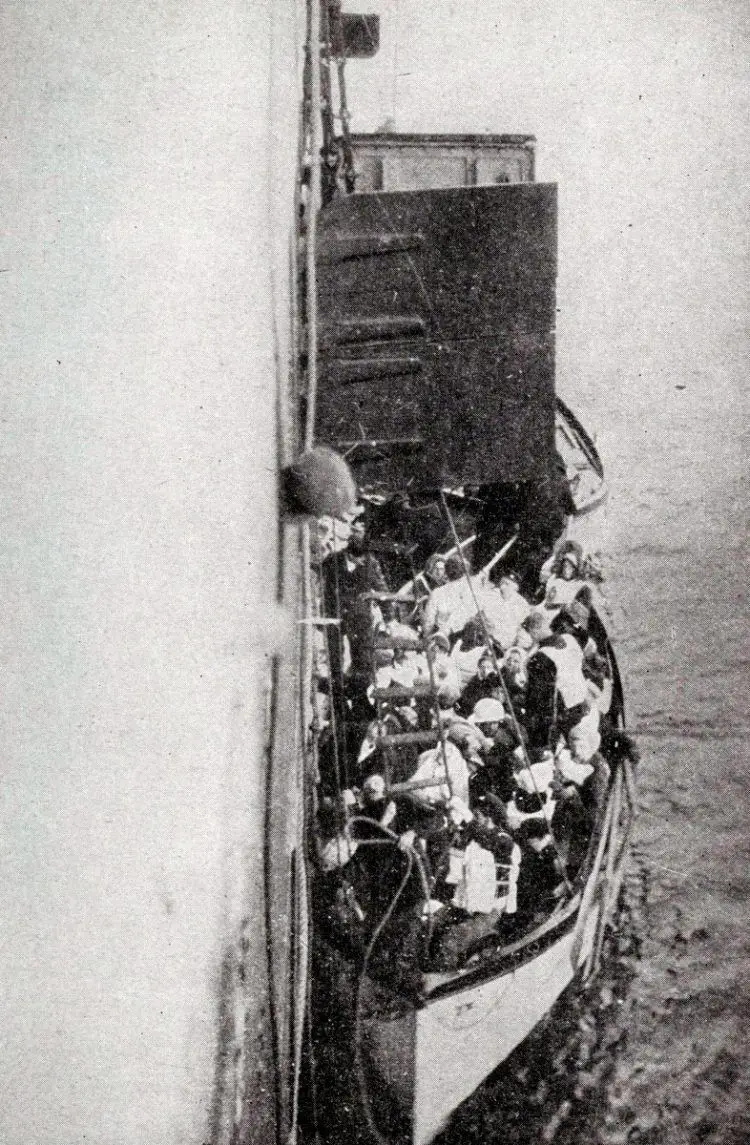
Lifeboat no.11 with passengers using a ladder to get onboard the Carpathia. (Click image to enlarge)
Rostron's response to the news meant the very first orders were directly to First Officer Dean. The first was a simple one: ".Immediately on getting the message, I gave the order to turn the ship around." As Rostron got dressed there were further orders: "In the meantime I was dressing, and I picked up our position on my chart, and set a course to pick up the Titanic. The course was north 52 degrees west true 58 miles from my position."
When Chief Officer Hankinson joined in the preparation efforts, it allowed an opportunity for Dean to oversee the preparing the lifeboats. Rostron related: "After that I gave the first officer, who was in charge of the bridge, orders to knock off all work which the men were doing on deck, the watch on deck, and prepare all our lifeboats, take out the spare gear, and have them all ready for turning outboard."[10.]
At 4am Hankinson took over from First Officer Dean as Officer of the Watch on the bridge - and it was a pivotal moment as that was also when the Carpathia encountered the first of the Titanic's lifeboats: "First Officer Dean was relieved on the bridge by Chief Officer Hankinson. At that moment, in the dim gray light of dawn, we sighted a lifeboat a quarter of a mile away." [11.]
That did not mean that Dean went off duty. In fact it seems he then could personally get involved in the rescue effort. Famously, Dean spotted a Titanic officer he recognised as was the last one to come through the gangway door:
"Boat No.12 was the last of the boats to be picked up and Lightoller was the very last Titanic survivor to be taken on board the Carpathia. 'Hello "Lights", what on earth are you doing here?' The Cunard First Officer at the gangway doors was Dean, an old friend. It was 8.30 a.m., just over 6 hours since the Titanic had gone down. [12.]
The source for this story appears to find its origin in a 20th anniversary interview with Lightoller - in 1932. He did not identify the officer at the time, and the phrasing is more polite:
"By this time the Carpathia had arrived on the scene. You can imagine my feelings when I looked up her side to recognise an old shipmate of mine.
The remark he made has stuck in my mind ever since: 'Hello, Lightoller,
whatever are you doing there?'" (Rotorua Morning Post, Volume 2, Issue 300, 13 August 1932, Page 3)
On the evening of Thursday the 18th of April, the Carpathia arrived in New York under heavy rain and Rostron had the liner dock at the White Star Line Pier 59 to unload the 13 remaining lifeboats before then proceeding to the Cunard Pier 54 to disembark the 712 survivors. While aboard the Carpathia, survivor Margaret Brown had created the Titanic Survivors Committee, was elected its chair and raised substantial sums of money. Other than supporting those who had survived, she also arranged for the presentation of a silver loving cup to Captain Rostron, and gold, silver and bronze medals for the officers and crew on the 29th of May 1912:
"The grateful survivors, through the Titanic Survivors Committee, commissioned a medal for the officers and crew of the Carpathia. Known as the Carpathia Commemorative M or simply the Carpathia Medal, the obverse featured a starboard view of the Carpathia sailing amongst icebergs with the lifeboats of R.M.S. Titanic in the water. The obverse is bordered with dolphins and surmounted by Neptune's head with a flowing beard. At the base of the obverse is a crossed anchor and staff. The reverse is inscribed, PRESENTED TO THE CAPTAIN OFFICERS AND CREW OF RMS CARPATHIA IN RECOGNITION OF GALLANT AND HEROIC SERVICE FROM THE SURVIVORS OF THE SS TITANIC APRIL 15TH 1912 DIEGES & CLUST NY. (maker's mark). Senior officers, including Captain Rostron, were given 14-karat yellow gold medals, junior officers received silver medals, and the crew received bronze medals. In total, 304 medals were awarded, 14 gold, 110 silver, and 180 bronze. Based on commentary, there may have been a small number, which were not awarded." (The Medal Hound, "RMS Carpathia Medals, http://themedalhound.com/carpathia/)
As the Carpathia's First Officer Horace Dean received a gold medal as described above, with his name engraved onto it. It was later sold at auction in 2017.
Group photographs
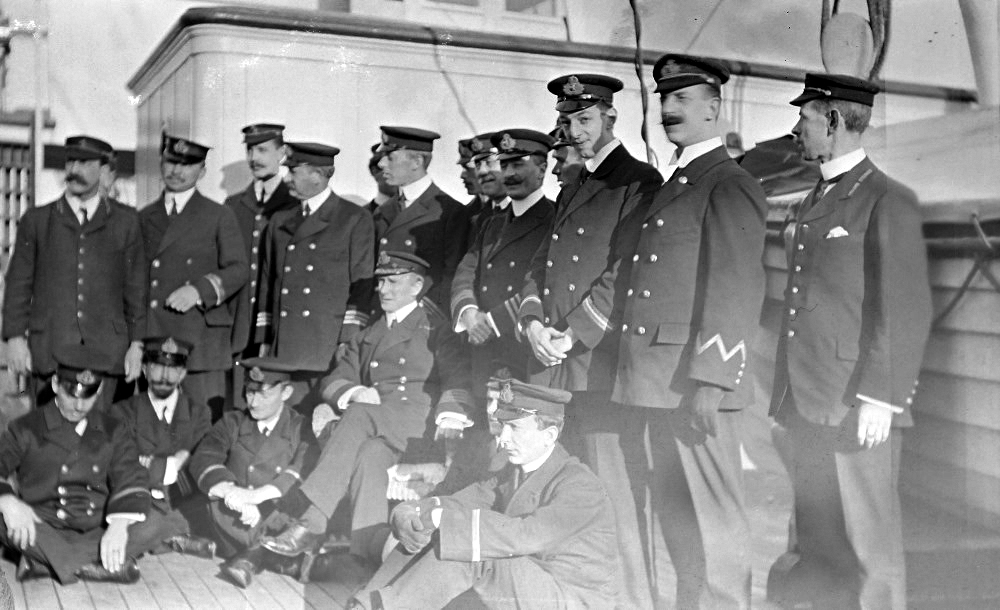
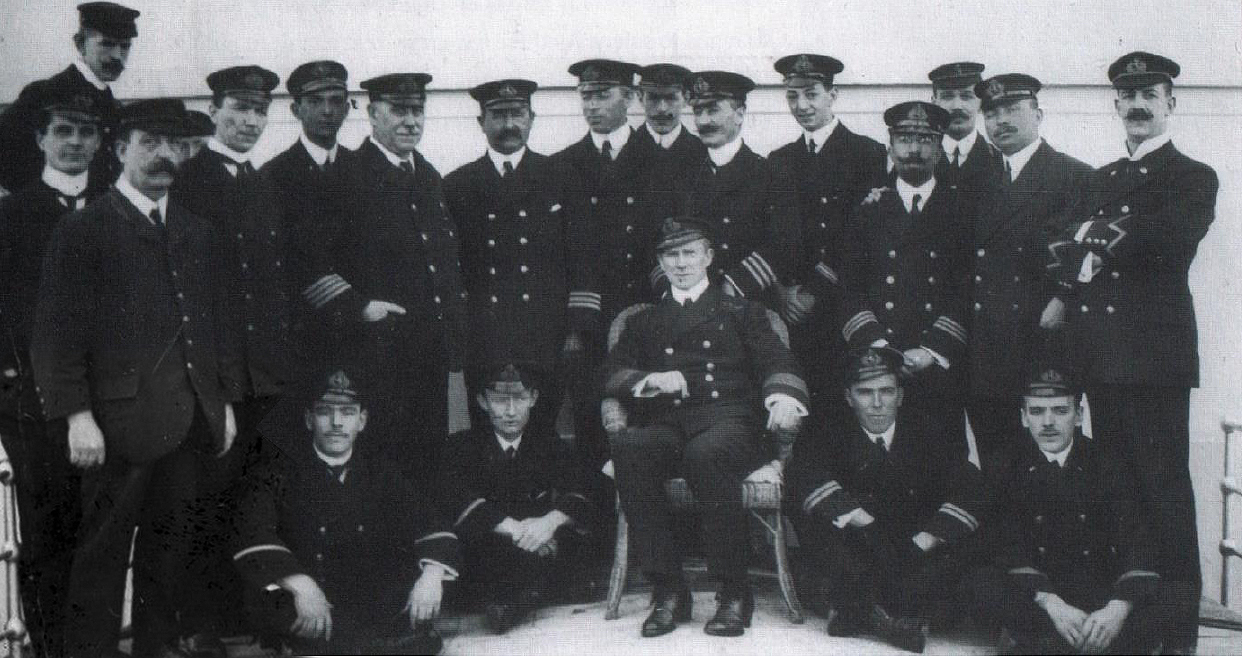
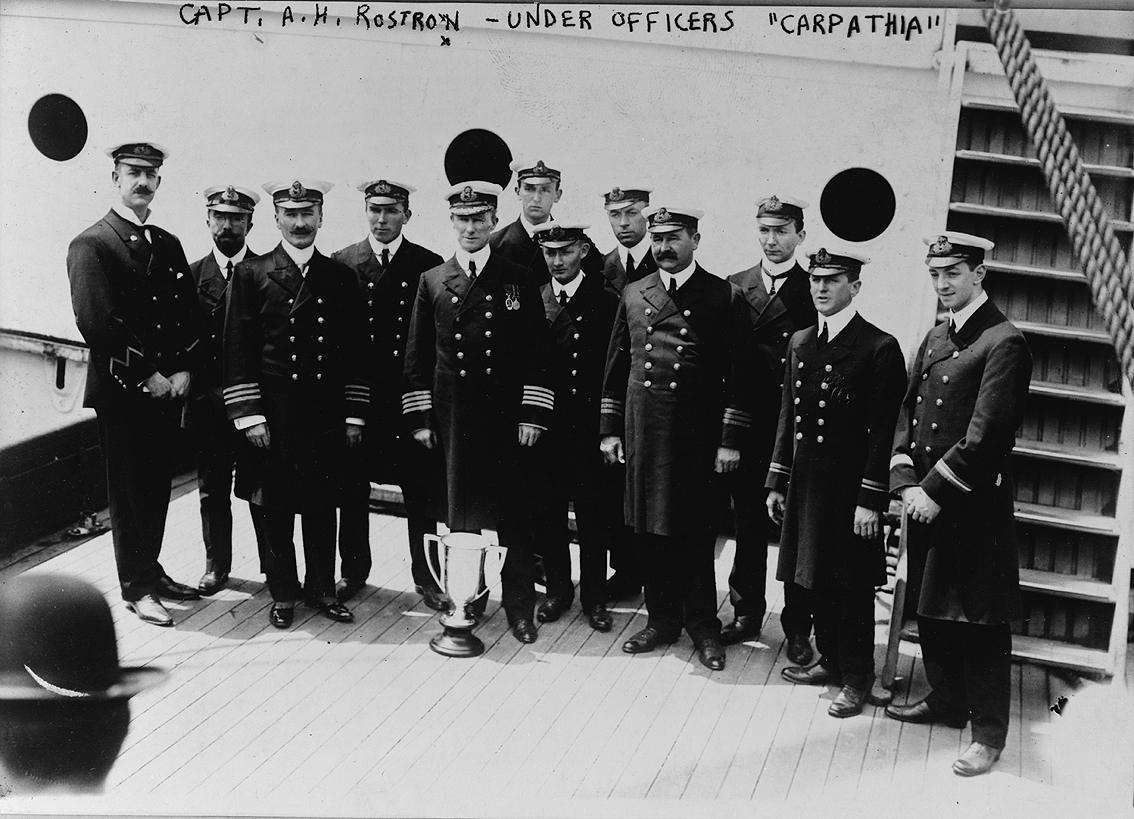
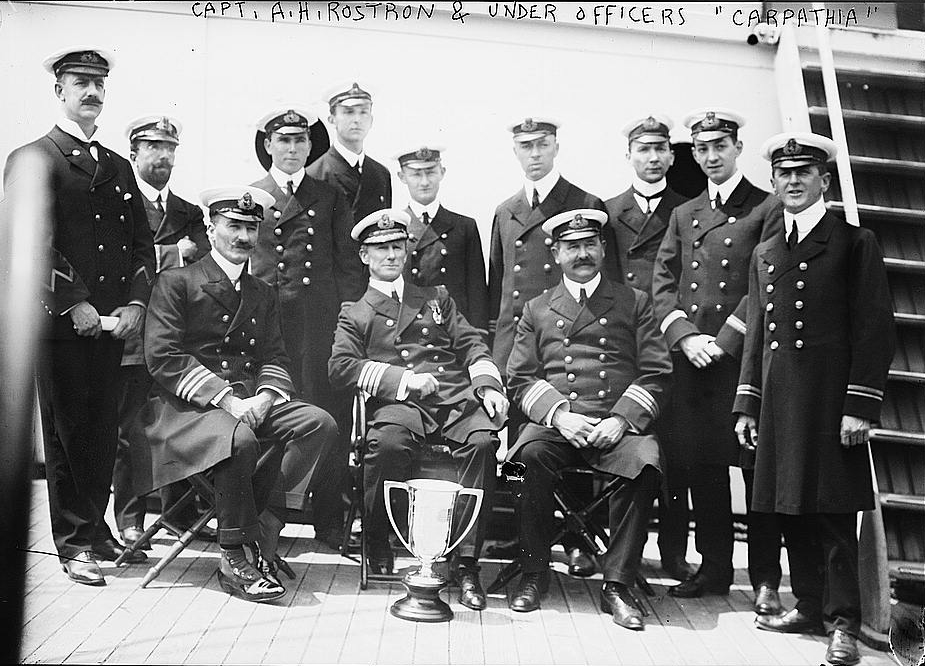
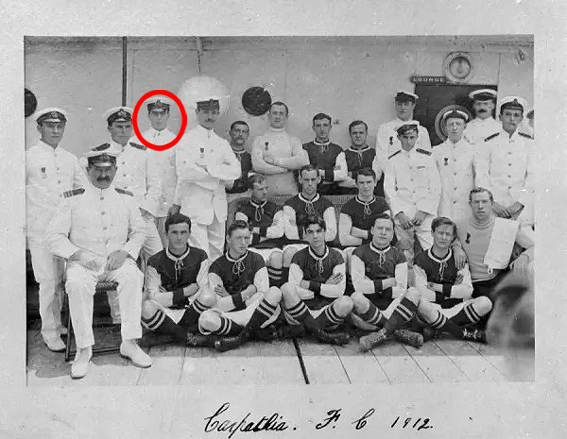
Dean appears in the first group photographs taken prior to receiving their medals, but during the later group photographs after receiving their medal and posing with the "Loving Cup" Dean suddenly disappears - perhaps called on duty - and since those later photographs became widely used his image has somewhat disappeared. He does however reappear during the photograph with the Carpathia football during the summer.
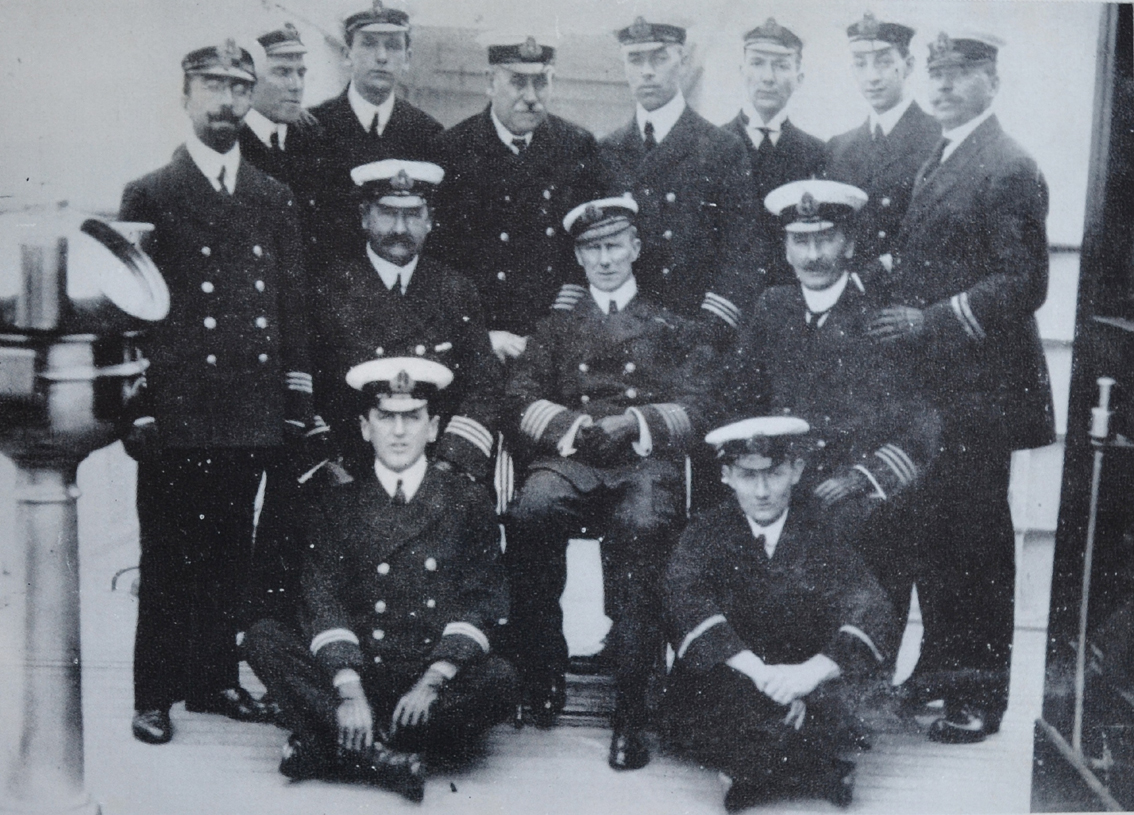
Photograph of the Carpathia's officers and crew assembled on the bridge, 1912. Back row: Dr. Vittorio Risicato, Second Officer James Bisset, Supernumerary Officer Gustav Rath, Chief Engineer Alexander Johnston, First Officer Horace Dean, Assistant Purser Percy Barnett, Purser E.F.G. Brown, Dr. Árpád Lengyel.
Center row: Chief Officer Hankinson, Captain A.H. Rostron, Dr Frank McGhee.
Front row: Third Officer Eric Rees, Fourth Officer Geoffrey Barnish. (Click image to enlarge)
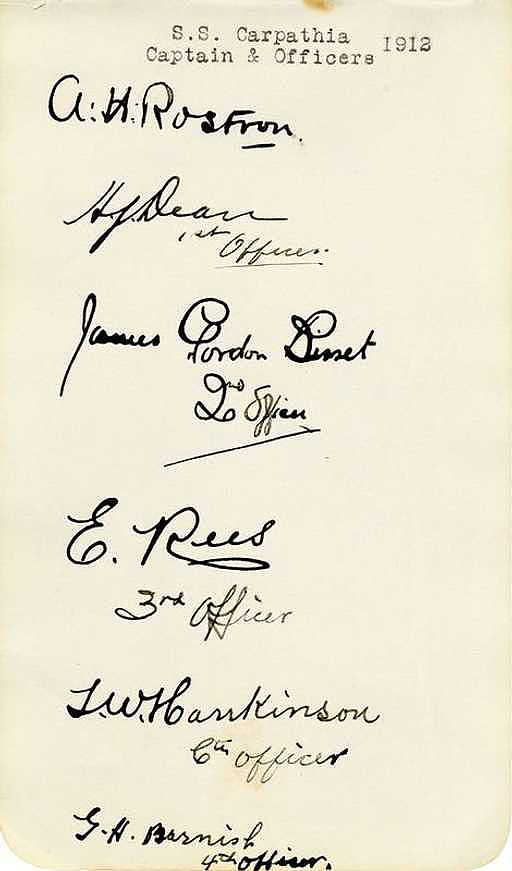
Autographs of the Carpathia's officers. From top: Captain Arthur Rostron, First Officer Dean, Second Officer Bisset, Third Officer Rees, Chief Officer Hankinson, Fourth Officer Barnish (Click image to enlarge)
A photograph of the Carpathia's officers standing on the deck in 1912. Dean is circled. (Click image to enlarge)
Alternate photograph of the Carpathia's officers standing on the deck in 1912, looking away. Dean is circled. Credit: Fenwick collection. (Click image to enlarge)
Same as above, but slightly different photograph of the Carpathia's officers standing on the deck in 1912, looking away. Dean is circled. Credit: James and Mabel Fenwick/Henry Aldridge (Click image to enlarge)
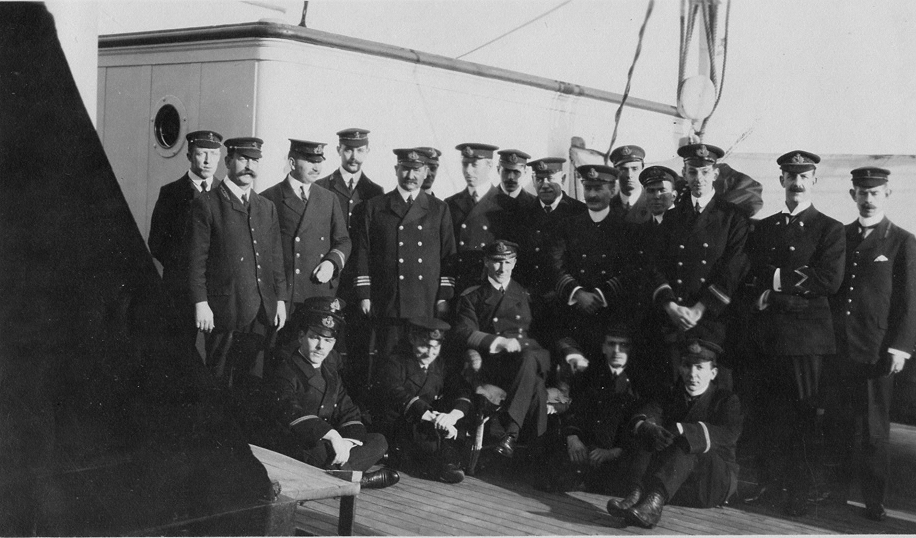
Photograph of Carpathia's officers and crew assembled on the deck in 1912. Dean is circled. (Click image to enlarge)
A photograph of the Carpathia's officers standing on the well deck in 1912. Dean is circled. Note the white "topper" caps which places this as further after the event than the previous photographs in which they are without the topper (the white "topper" cap is worn during the transition between winter and summer). (Click image to enlarge)
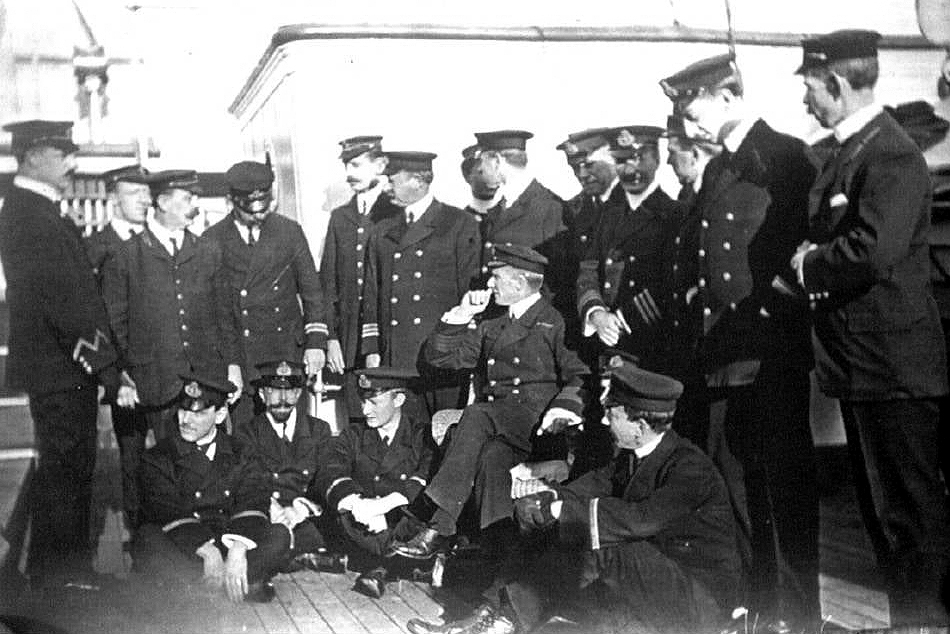
Alternate view of a smaller group of theCarpathia's officers assembled on the well deck in 1912 - looking to their left. Harkinson is sitting on the right. (Click image to enlarge)
Members of the Carpathia football club, posing with the Carpathia officers, some of whom are wearing the medal awarded due to the Titanic rescue. Hankinson is seated - second from the left. (Mary Evans Picture Library/ONSLOW AUCTIONS LIMITED)
Endnotes:
1. RNR records, ADM-340-39-36↩ 2. "British Wreck Commissioner's Inquiry: Day 15, Testimony of Harold T. Cottam". Titanic Inquiry Project. 24 May 1912 ↩ 3. "British Wreck Commissioner's Inquiry: Day 15, Testimony of Harold T. Cottam". Titanic Inquiry Project. 24 May 1912 ↩ 4. https://www.paullee.com/titanic/BBC1956.php ↩ 5. Testimony of Arthur H. Rostron, United States Senate Inquiry Day 1, https://www.titanicinquiry.org/USInq/AmInq01Rostron01.php↩ 6. Rostron's 1913 Scribner's magazine article, courtesy of Sam Halpern.↩ 7. "Home From The Sea" by Rostron Arthur H. Publication dated 1931 ↩ 8. https://titanic.fandom.com/wiki/Horace_John_Dean ↩ 9. Encyclopedia Titanica, forum, https://www.encyclopedia-titanica.org/community/threads/dean-and-cottam.60341/
Testimony of Arthur H. Rostron, United States Senate Inquiry Day 1, https://www.titanicinquiry.org/USInq/AmInq01Rostron01.php↩ 10. Testimony of Arthur H. Rostron, United States Senate Inquiry, Day 1, https://www.titanicinquiry.org/USInq/AmInq01Rostron01.php ↩ 11. "Tramps and Ladies" by Sir James Bisset, 1959↩ 12. "Titanic Voyager: The Odyssey of C.H. Lightoller" 1998, by Patrick Stenson, p194↩